
Know Exactly What You Have — and What It's Worth
An automotive physical inventory is the only way to know what is actually on your shelves. The average new-car dealership carries a $350,000 investment in parts, yet the National Automobile Dealers Association (NADA) reports that the average parts inventory is 65% or more inaccurate or inactive. That means somewhere between $227,500 and $625,000 may be tied up in parts you can't confidently sell. A professional annual physical parts inventory replaces guesswork with hard numbers your entire fixed operations team can trust.
Most dealerships rely on a DMS to track, bill, and analyze parts — but a computer record is only as good as the count behind it. When those records drift out of sync with the shelf, every downstream decision suffers.
Why an Annual Physical Inventory Is Essential
An annual physical parts inventory is essential to the continued success of any new-car dealership's fixed operations. Parts managers are constantly chasing a healthy inventory mix and obsolescence reduction — but that effort is futile if the underlying records are simply wrong. You cannot sell a part if you don't know you have it, or don't know where to find it.
A reputable, independent third party should perform this work. An outside count removes internal bias, protects your staff from liability, and gives ownership an objective picture of the department's true position.
Why Choose Mitchell Automotive Services
Mitchell Inventory Service is licensed, bonded, and insured. Our count staff and supervision are our responsibility — the liability of having non-dealership personnel perform your count rests with us, not you. We have performed dealership physical inventories for over 30 years, and our strategic pricing structure reveals the true cost of pulling your own employees off the counter to count instead.
What You Receive
- A complete cycle count of all inventory housed in your parts department, recorded efficiently and accurately.
- An easy-to-understand synopsis of your parts inventory's true dollar value.
- Your DMS updated to reflect actual parts in their correct bin locations.
- A general-ledger balance your accountant can trace and defend for tax, booking, and investment decisions.
- A reliable, objective performance-rating tool for your parts manager.
Free Up Idle Capital
When you know exactly what you have and where to find it, you regain control of the real dollars invested in parts inventory. Obsolete and inactive stock becomes visible, capital stops sitting idle on the shelf, and your parts department finally operates on numbers you can trust.
How Our Physical Inventory Process Works
Every dealership is different, but the shape of a professional parts physical inventory is consistent. Here is what working with Mitchell Automotive Services looks like from first call to final reconciliation.
1. Scope & Schedule
We review the size of your parts department, your DMS, and your fiscal calendar, then agree on a count date that fits your month-end and manufacturer reporting deadlines.
2. Pre-Count Preparation
Before a single shelf is counted we address outstanding paperwork — open repair orders, unposted receipts, and in-transit stock — so the count reflects reality rather than paperwork lag.
3. The Physical Count
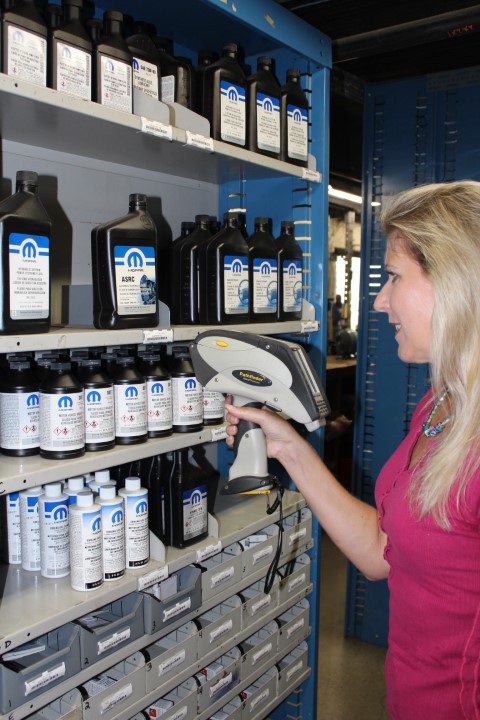
Our own supervised staff performs a complete cycle count of everything housed in the parts department, capturing quantities and true bin locations as they go.
4. Reconcile & Report
We update your DMS to match the shelf, reconcile to the general ledger, and hand your management team a plain-English synopsis of what the department is actually worth.
Works With Your DMS
A count is only useful if it lands correctly in the system your team uses every day. We perform dealership parts inventories on CDK Global, Reynolds & Reynolds, Dealertrack, Tekion, and all major dealer management systems. Your records come back updated with accurate quantities and correct bin locations, ready for your parts staff on the next business day.
If you run a platform not listed here, it is almost certainly one we have worked in before — ask us and we will confirm before you commit to anything.
Counted On Your Schedule
The most common objection we hear is the fear of closing the counter for a day. You decide how we work: our teams count during normal business hours or after hours and on weekends, whichever costs your store less. Many dealers prefer an after-hours count so the parts department opens the next morning with clean numbers and no lost selling time.
We also work around your fiscal calendar and factory reporting dates, so the numbers land when your accounting office actually needs them.
Signs Your Dealership Is Overdue for a Physical Inventory
Parts departments rarely drift out of accuracy all at once. These are the symptoms we hear most often before a count:
- Special-ordering parts you already own. The shelf has it, the system does not show it, and the customer waits an extra day for a part sitting twenty feet away.
- A parts-to-GL variance nobody can explain. The controller and the parts manager are working from two different numbers and neither can prove which one is right.
- Bin locations your team no longer trusts. Staff hunt for stock by memory instead of by location, and new hires take months to become productive.
- Obsolescence that only surfaces at return time. Aged and inactive stock goes unnoticed until the manufacturer's return window has already closed.
- An upcoming transaction or audit. Buy/sell due diligence, a lender request, or a factory audit will expose inventory inaccuracy quickly and expensively.
If more than one of these sounds familiar, the underlying problem is almost always record accuracy rather than staff performance — and a professional count is the fastest way to establish a trustworthy baseline.
Counting It Yourself Is Rarely Cheaper
Plenty of dealerships try an in-house count first. On paper it looks free; in practice it carries costs that never make it onto the invoice. Your counter staff stop selling parts in order to count them, so the department absorbs lost gross on top of the labor hours. The people counting are the same people responsible for the results, which removes the objectivity ownership needs. And if a discrepancy later becomes a dispute, the liability sits with your dealership rather than with a licensed, bonded, and insured third party.
Our pricing structure is deliberately built to make that comparison visible, so you can weigh a professional count against the true internal cost rather than against zero. Request a free quote and we will walk through the math for your store.
Physical Inventory FAQs
How often should a dealership take a physical parts inventory?
At least once a year. An annual count is considered a baseline discipline in dealership fixed operations, and many stores schedule theirs around fiscal year-end so the corrected valuation flows straight into their financial statements.
Will my parts department have to close?
Not unless you want it to. We count during business hours or after hours and on weekends, whichever is less disruptive for your store.
Which dealer management systems do you support?
CDK Global, Reynolds & Reynolds, Dealertrack, Tekion, and all major DMS platforms. Your system is updated with accurate quantities and correct bin locations when we finish.
Who actually performs the count?
Our own count staff, under our own supervision. Mitchell Inventory Service is licensed, bonded, and insured, so the liability of having non-dealership personnel in your parts department rests with us rather than with you.
Do you reconcile to the general ledger?
Yes. You receive a general-ledger balance your accountant can trace and defend for tax, booking, and investment decisions — not just a count sheet.
What does a physical inventory cost?
Pricing depends on the size of your parts department, your location, and your scheduling preferences, so we quote each store individually. Estimates are always free and carry no obligation.
Want ongoing insight between annual counts? See our dealership parts inventory analysis service, review our buy/sell asset appraisals if a transaction is on the horizon, or explore all of our fixed operations services.